General Office of the CPC Central Committee and General Office of the State Council Issue a Major Document: Accelerate the R&D, Application and Promotion of Additive Manufacturing and Other New Technologies and Products!
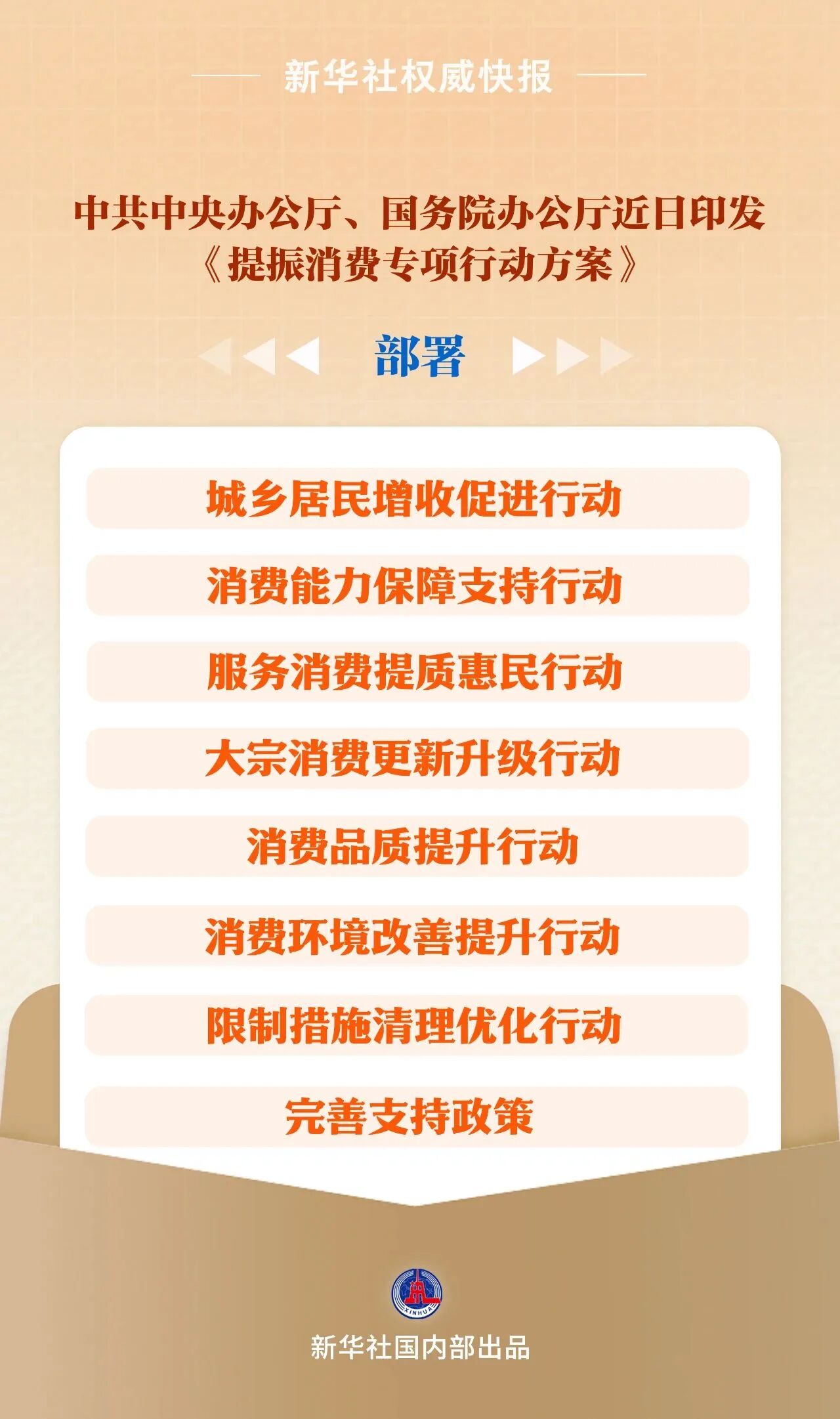
Recently, the General Office of the Communist Party of China Central Committee and the General Office of the State Council have issued the Action Plan for the Special Campaign to Boost Consumption and issued a notice, requiring all regions and departments to earnestly implement it in light of their actual circumstances.
The full text of the Action Plan for the Special Campaign to Boost Consumption is as follows:
To vigorously stimulate consumption, expand domestic demand in an all-round manner, enhance consumption capacity by increasing residents' income and reducing their burdens, create effective demand through high-quality supply, strengthen consumers' willingness by improving the consumption environment, and address the prominent contradictions and problems restricting consumption in a targeted manner, this Plan is formulated for the implementation of the special campaign to boost consumption.
I. Campaign to Promote Income Growth of Urban and Rural Residents
(1) Promote the Rational Growth of Wage Income
Implement employment support programs covering key fields, key industries, urban and rural grassroots units, and micro, small, and medium-sized enterprises. Continue the implementation of the unemployment insurance policy for stabilizing employment positions and returning premiums. Strengthen employment support in response to changing situations to facilitate the employment of key groups. Launch special skills training programs targeting key fields and groups, improve the diversified investment mechanism, and refine the vocational skill level evaluation system. Improve the adjustment mechanism for the minimum wage standard and raise it in a scientific and reasonable manner. Scale up the implementation of the work-for-relief program in the construction of major projects and small-to-medium-sized agricultural and rural infrastructure, and expand the scale of labor remuneration distribution.
(2) Broaden Channels for Property Income
Adopt multiple measures to stabilize the stock market, strengthen the reserve of strategic forces and the construction of market stabilization mechanisms. Accelerate the removal of bottlenecks hindering the entry of medium and long-term funds into the market, including funds from commercial insurance, the National Social Security Fund, the Basic Pension Insurance Fund, and enterprise (occupational) annuity funds. Strengthen the market value management of listed companies controlled by central and state-owned enterprises. Severely crack down on illegal activities in the capital market in accordance with the law, such as financial fraud and illegal reduction of shareholdings by shareholders of listed companies. Further enrich the variety of bond-related products suitable for individual investors.
(3) Take Diversified Measures to Increase Farmers' Income
Improve the benefit guarantee mechanism for grain-growing farmers and the distribution mechanism for land value-added benefits. Explore ways to revitalize and utilize legally owned housing of farmers through leasing, equity participation, cooperation and other models. Launch the campaign to enhance capabilities and increase income for low-income rural groups, continue the high-quality agricultural brand cultivation program, and implement the initiative for agricultural products with "Three Certificates and One Registration" , so as to promote the consumption of green, organic, high-quality, new and geographical indication agricultural products. Foster new types of agricultural operators, develop courtyard economy, under-forest economy and homestay economy in light of local conditions, implement the subsidy policy for the scrapping and renewal of agricultural machinery, and strengthen the role of industries in linking and benefiting farmers.
(4) Earnestly Resolve the Problem of Arrears
Accelerate the settlement of arrears owed to enterprises and consolidate the territorial responsibilities of local governments. Ensure that all payable arrears to enterprises, especially micro, small, and medium-sized ones, are paid promptly and in full. Strengthen audit supervision and credit constraints for dishonesty, and improve the long-term mechanism for clearing up arrears.
II. Campaign to Safeguard and Support Consumption Capacity
(5) Strengthen Support for Maternity and Childcare
Explore the establishment of a childcare subsidy system. Guide qualified regions to include flexible employees, migrant workers, and workers in new employment forms who participate in the employee basic medical insurance into the maternity insurance scheme. Launch the Annual Pediatric Services Improvement Initiative to expand the supply of pediatric services. During peak seasons for children's seasonal diseases, increase the availability of night pediatric outpatient and emergency services in general hospitals.
(6) Intensify Educational Support
Expand the supply of educational resources in cities with a net inflow of school-age population. In 2025, raise the standards of some student subsidies and expand the policy coverage; continue the interest-free national student loan policy and the policy of deferring principal repayment. Promote the alignment of academic disciplines and major settings in colleges and universities with innovation chains and industrial chains, and enhance the adaptability of talent training to the needs of economic and social development.
(7) Improve Medical and Elderly Care Security Capabilities
Improve the mechanism for the rational adjustment of basic pension insurance benefits. In 2025, increase the basic pension for urban and rural residents, the fiscal subsidy standard for urban and rural residents' basic medical insurance, and appropriately raise the basic pension for retirees. Fully implement the personal pension system. Promote the abolition of household registration restrictions for flexible employees to participate in basic pension and medical insurance in their places of employment, and expand the pilot program for occupational injury protection.
(8) Ensure the Basic Livelihood of Key Groups
Strengthen the dynamic monitoring of low-income groups and provide tiered and classified assistance. Promote the improvement of the basic living assistance system, raise the level of special assistance, and strengthen developmental assistance through industries and employment. Enhance support for care services for fully disabled elderly people. Encourage qualified regions to provide subsidies or one-time living allowances to needy groups based on local conditions. Timely and fully issue unemployment insurance benefits to eligible unemployed persons.
III. Campaign to Improve Service Consumption Quality for People's Well-being
(9) Optimize the Supply of Services for the Elderly and Children
Promote age-friendly renovations across society, support local governments in conducting pilot projects, and comprehensively advance the installation of elevators in multi-story buildings and the development of elderly meal assistance services. Vigorously develop industries such as anti-aging services and silver-haired tourism to tap the potential of the silver-haired consumption market. Encourage the development of community-embedded childcare services, employer-provided childcare services, and integrated nursery and kindergarten services. Support and regulate social forces in developing elderly and childcare services, and improve the price formation mechanism for elderly care services. Encourage qualified regions to provide venue support and operational subsidies to inclusive childcare institutions based on actual conditions.
(10) Boost Consumption in Daily Services
Strengthen the capacity building for service supply, and support the innovation of service consumption scenarios, the integration of business formats, and industrial agglomeration. Improve the quality of catering services and support local governments in developing featured catering. Increase efforts in domestic service training, encourage more colleges and vocational schools to offer domestic service-related majors, launch the special training program for upgrading and expanding women's domestic services, and improve the standardization and credit systems for the domestic service industry. Accelerate the improvement of community service outlets for shopping, catering, domestic services, and maintenance, in conjunction with the construction of 15-minute community life circles and embedded community service facilities in cities.
(11) Expand Consumption in Culture, Sports and Tourism
Further promote the integration of online and offline consumption, as well as the convergence of multiple business formats including commerce, tourism, culture, sports, and health, and create diversified consumption scenarios. Support scenic spots and cultural and museum institutions in expanding service items, appropriately extending business hours, and increasing reception capacity. Encourage all regions to increase the supply of high-quality sports programs and characteristic sports events. Streamline the approval process for commercial performances, sports events, and various large-scale mass activities. Safely and controllably increase the number of available tickets, strictly implement the responsibility system for content review of touring performances at their premiere venues, and promote the model of "one approval for nationwide tours".
(12) Drive Ice and Snow Consumption
Launch the Ice and Snow Tourism Enhancement Program, organize consumption promotion activities such as ice and snow consumption seasons, and build a number of high-quality ice and snow-themed scenic spots and resorts. Support regions rich in ice and snow resources in developing into world-renowned high-quality ice and snow tourism destinations. Encourage all regions to enrich the supply of ice and snow venues and consumption products according to local conditions and seasons.
(13) Develop Inbound Consumption
Steadily expand the scope of countries eligible for unilateral visa-free entry, and optimize and improve regional visa-free entry policies. Launch more high-quality inbound tourism routes and services, enhance the convenience of travel in China for foreign tourists, and foster international-oriented markets such as medical services and exhibitions. Further promote the development of international consumption center cities. Support the opening of duty-free shops at city ports where conditions permit. Enable more high-quality merchants to become tax-refund-for-departure stores and promote the "instant tax refund upon purchase" service for shopping tax refund upon departure.
(14) Steadily Promote the Further Opening-up of the Service Industry
Expand pilot opening-up in fields such as telecommunications, medical care, and education. Focus on meeting residents' demand for consumption upgrading, and promote the import of high-quality daily services including medical and health services and cultural and entertainment services. Promote the inclusion of service consumption items such as camping, homestays, property services, and "Internet + medical care" into the Catalog of Industries Encouraged for Foreign Investment.
IV. Campaign for the Renewal and Upgrading of Bulk Consumption
(15) Strengthen Support for the Trade-in of Consumer Goods
Make good use of ultra-long-term special treasury bond funds to support local governments in expanding the scope and intensity of the trade-in program for consumer goods. Promote the green and intelligent upgrading of bulk durable consumer goods such as automobiles, home appliances, and home decoration materials, support the replacement of qualified and safe electric bicycles, and provide subsidies for the purchase of three types of digital products, namely mobile phones, tablets, and smart watches (bands). Promote the construction of pilot projects for second-hand goods circulation, foster diverse entities in the second-hand goods market, and innovate circulation models for second-hand goods.
(16) Better Meet Housing Consumption Demand
Continuously promote the stabilization of the real estate market and reverse the downward trend. Intensify the renovation of urban villages and dilapidated buildings to fully release the potential of rigid and improved housing demand. Allow special bonds to support municipal governments in purchasing existing commercial housing for use as affordable housing. Implement tax policies conducive to the stable and healthy development of the real estate market. Reduce the loan interest rate for housing provident funds in a timely manner. Expand the scope of housing provident fund usage, support contributors to withdraw provident funds for down payments while applying for housing provident fund personal loans, increase support for provident fund withdrawals for rental purposes, and advance pilot projects for flexible employees to contribute to the provident fund.
(17) Extend the Automobile Consumption Chain
Launch pilot reforms for automobile circulation and consumption, and expand consumption in the post-automobile market such as automobile modification, leasing, motor sports, and RV camping. Foster and expand second-hand car operators, and continue to implement convenient measures such as "reverse invoicing" for second-hand car sales and cross-regional transaction registration. Strengthen information sharing in the automobile sector, support the development of third-party second-hand car information inquiry platforms, and facilitate safe and convenient transactions of second-hand cars.
V. Campaign for Improving Consumption Quality
(18) Strengthen the Leading Role of Consumption Brands
Formulate targeted policies to improve service quality for sectors such as commerce, logistics, culture, and tourism, and create more Chinese service brands. Integrate fine traditional Chinese culture into product design, support the development of original intellectual property (IP) brands, promote the consumption of animations, games, e-sports, and their peripheral derivatives, and explore new domestic and international markets for trendy domestic products. Promote the first-launch economy in light of local conditions, and encourage high-quality domestic and foreign brands of goods and services to open flagship stores and hold premieres and first exhibitions. Support and promote new consumption formats and models. Organize a series of "Shop in China" activities to build a matrix of famous Chinese consumer brands.
(19) Accelerate the Development of New Types of Consumption
Further implement the Digital Consumption Enhancement Initiative and vigorously cultivate high-quality e-commerce platforms. Launch the "Artificial Intelligence +" initiative to promote the integration of artificial intelligence and consumption. Accelerate the R&D, application, and promotion of new technologies and products such as autonomous driving, smart wearables, ultra-high-definition video, brain-computer interfaces, robots, and additive manufacturing, and develop new high-growth consumption tracks. Launch the special campaign for healthy consumption. Accelerate the improvement of the regulatory system for the low-altitude economy, and steadily develop low-altitude consumption such as low-altitude tourism, air sports, and consumer-grade drones. Enrich cruise routes and tourism products, and simplify the registration and filing procedures for yachts.
(20) Improve the Integration of Domestic and Foreign Trade
Promote the connection and integration of systems such as standards and certifications for domestic and foreign trade. Support export-oriented products to enter the domestic market, launch the "High-quality Foreign Trade Products Tour in China" activity, and guide original equipment manufacturing (OEM) enterprises to accelerate the development of independent brands. Implement the domestic trade credit insurance policy to support the integration of domestic and foreign trade.
VI. Campaign for Improving the Consumption Environment
(21) Protect the Rights to Rest and Leave
Strictly enforce the paid annual leave system and make the implementation of this system a key part of trade unions' efforts to safeguard employees' rights and interests. Organization departments of local Party committees and human resources and social security departments shall strengthen the regular supervision over the implementation of rest and leave systems in all entities, with the implementation of paid annual leave as a key supervision focus. Encourage combining paid annual leave with short holidays to realize flexible and staggered leave arrangements. Legally protect workers' rights to rest and leave and prohibit any illegal extension of their working hours. Encourage qualified regions to explore the establishment of spring and autumn vacations in primary and secondary schools based on local realities.
(22) Create a Trustworthy Consumption Environment
Launch a three-year campaign to improve the consumption environment, and further improve systems related to quality standards, credit constraints, comprehensive governance, and consumer rights protection. Improve the standard system for consumer goods and service consumption, strengthen the development of the credit system in the consumption sector, improve the multi-dimensional dispute resolution mechanism for consumption issues, and promote more efficient approaches to safeguarding consumer rights. Regulate irrational business practices such as claims of "the lowest price across all platforms" in online sales and live-streaming commerce. Advocate genuine pricing and high quality, severely crack down on the sale of counterfeit and shoddy products in accordance with the law, and strengthen the supervision over the recall of defective products. Further address the problems of multi-layered TV subscription fees and complicated operation procedures.
(23) Improve Urban and Rural Consumption Facilities
Further carry out the county-level commerce development initiative and the renovation and upgrading program for "thousands of markets and ten thousand stores". Strengthen the construction of county-level logistics distribution centers and terminal logistics facilities in rural areas. Vigorously develop smart business districts and immersive experience spaces, and promote the transformation of traditional department stores and other physical stores into new-type commercial venues. Increase supporting guarantees such as venues for business activities, public transport capacity, and temporary parking spaces in areas with concentrated nighttime consumption.
VII. Campaign to Streamline and Optimize Restrictive Measures
(24) Steadily Reduce Consumption Restrictions
All regions and relevant departments shall, in light of actual conditions, promptly abolish unreasonable restrictions on consumption and refrain from adopting a "one-size-fits-all" approach or excessive layer-by-layer tightening of policies. Promote the shift from purchase-based regulation to usage-based regulation in the consumption of automobiles and other products. Ensure the car-purchasing needs of carless households that have repeatedly failed in license plate lotteries over years in a phased manner. Guide local governments to organize traditional folk consumption activities in an orderly manner. Ensure that all types of business entities can equally participate in group procurement, and prohibit the disguised setting of procurement barriers related to ownership type or merchant ratings.
(25) Continuously Optimize the Business Environment
Improve the management model of the Market Access Negative List. Focus on fields such as environmental protection, hygiene, security, quality inspection, and fire protection, and thoroughly eliminate various barriers to market access to create a stable, fair, transparent, and predictable market environment. Encourage all regions to streamline the approval process for promotional activities, community markets, outdoor exhibitions, and store sign installations, and implement an online instant reporting and approval system. Improve the efficiency of random inspection through cross-departmental joint supervision, and adopt a non-intrusive supervision approach for public consumption venues.
VIII. Improve Supporting Policies
(26) Strengthen the Coordination and Linkage of Consumption-Promoting Policies
Reform and improve the institutional mechanism for promoting consumption, improve and effectively utilize the assessment mechanism for the consistency of macro-policy orientations. Strengthen the coordination between consumption policies and those related to fiscal taxation, finance, industry, and investment to promote synergy and form a joint force, thereby establishing a more favorable policy system for boosting consumption.
(27) Enhance the Supporting Role of Investment in Consumption
Better coordinate investment and consumption, expand effective investment in consumption infrastructure, projects for upgrading consumption service functions, and new consumption formats and models. Promote a positive interaction between improved investment returns and expanded, upgraded consumption. Increase support from central budgetary investment for project construction in fields such as education, medical care, vocational training, elderly care and childcare, culture, tourism, and sports to address weaknesses in public services. Support eligible projects in consumption, culture, and tourism sectors in issuing Infrastructure Real Estate Investment Trusts (REITs).
(28) Give Play to the Guiding and Driving Role of Fiscal Policies
Utilize policy tools including fiscal subsidies and loan interest discounts, focus on key areas, and implement targeted policies. Integrate consumption promotion with improving people's well-being and addressing development weaknesses to expand consumption demand and enhance consumption capacity. Better leverage the positive role of consumption in smoothing the national economic cycle and driving economic growth.
(29) Strengthen Credit Support
Encourage financial institutions to increase the issuance of personal consumption loans on the premise of controllable risks, and set reasonable loan limits, terms, and interest rates. Support financial institutions in optimizing the repayment methods for personal consumption loans and conducting renewal of loans in an orderly manner in accordance with market-oriented and legal principles. Provide fiscal interest subsidies in 2025 for eligible personal consumption loans and loans granted to service-oriented business entities in the consumption sector.
(30) Improve Supporting Guarantee Measures for Consumption
Encourage trade unions at all levels to use their funds for consumption-related areas such as holiday gifts, staff fitness activities, and cultural and sports events. Intensify consumption-based poverty alleviation efforts and strengthen precise connection between production and sales. Explore the launch of prize-winning invoice programs. Improve the statistical monitoring system for service consumption as well as new consumption formats and models. Strengthen the regional breakdown statistics of online retail sales of physical goods from the buyer's perspective and improve the comprehensive consumption statistical system.
All regions and departments shall attach greater importance to boosting consumption, earnestly fulfill their responsibilities according to the division of work, and strengthen coordination and linkage. They should improve working mechanisms, explore practical measures based on local conditions, and accelerate the formation of synergy. Efforts should be made to stabilize market expectations and effectively promote the rapid and smooth implementation of various policies and measures for boosting consumption.


 简体中文
简体中文
 Xie Weifeng +86 134 1380 8852
 gzswlzczzyjy@163.com
 Room 202, 2nd Floor, Building D, Guangzhou Laser and Additive Manufacturing Industrial Park, Longxi Avenue, Liwan District, Guangzhou